You’ve decided an agency might help. Then you open a few agency websites and hit a wall of service names: SEO, PPC, CRO, automation, attribution, with little sense of which ones you actually need.
That’s the real problem. Most agencies list everything they sell, but few explain which services solve your problem, which ones return money fastest, and which ones to buy first.
Spending blindly here is expensive. You can pour budget into a service that won’t move the needle for months while ignoring the one that would have paid off in weeks.
This guide fixes that. You’ll get the full menu of digital marketing agency services, a clear view of ROI by service, a prioritization framework, and ready-made service stacks by business type. It’s built for founders, marketing managers, and decision-makers who want to spend smart, not just spend.
What Are Digital Marketing Agency Services?
Quick answer: Digital marketing agency services are the specialized offerings an agency uses to grow your business online, including SEO, PPC, content, social media, email, branding, CRO, web development, and analytics.
A Simple Definition
Each service is a lever. SEO pulls in organic traffic. PPC buys instant visibility. CRO squeezes more revenue from the traffic you already have. Branding shapes how people see you. Analytics tells you what’s working.
An agency offers these as a menu, but the best results come from combining the right few, not buying all of them.
Why Services Work Better Together
Services rarely succeed in isolation. Content fuels SEO. SEO and PPC fill the funnel. CRO converts that traffic. Email and automation nurture leads who aren’t ready yet. Analytics ties it all back to revenue.
Here’s the takeaway: Think in systems, not silos. A connected set of three or four services usually beats ten disconnected ones.
The Full List of Digital Marketing Agency Services
Here’s what most full-service agencies offer, what each does, and who needs it.
SEO Services
What it is: Search engine optimization improves your visibility in organic search results.
Who needs it: Any business that wants steady, lower-cost traffic over time.
Expected outcome: Higher rankings, more organic leads, lower long-term cost per acquisition, usually visible in 3–6 months.
PPC and Performance Marketing
What it is: Paid advertising on search and social, where you pay per click and tie spend to measurable outcomes.
Who needs it: Businesses that need fast, trackable results or want to test demand quickly.
Expected outcome: Immediate traffic and leads, with clear cost-per-lead and return on ad spend (ROAS).
Content Marketing
What it is: Articles, guides, videos, and pages that attract and educate your audience.
Who needs it: Brands building authority, supporting SEO, or nurturing longer sales cycles.
Expected outcome: Compounding organic traffic and stronger trust over the months.
Social Media Marketing
What it is: Building awareness and community across platforms like Instagram, LinkedIn, and TikTok.
Who needs it: Brands that sell on relationships, visuals, or community.
Expected outcome: Reach, engagement, and a warmer audience for other channels.
Email Marketing and Automation
What it is: Nurturing leads and customers through targeted, often automated email sequences.
Who needs it: Any business with a list and repeat-purchase or longer-cycle sales.
Expected outcome: High ROI from existing contacts’ email remains one of the most cost-effective channels.
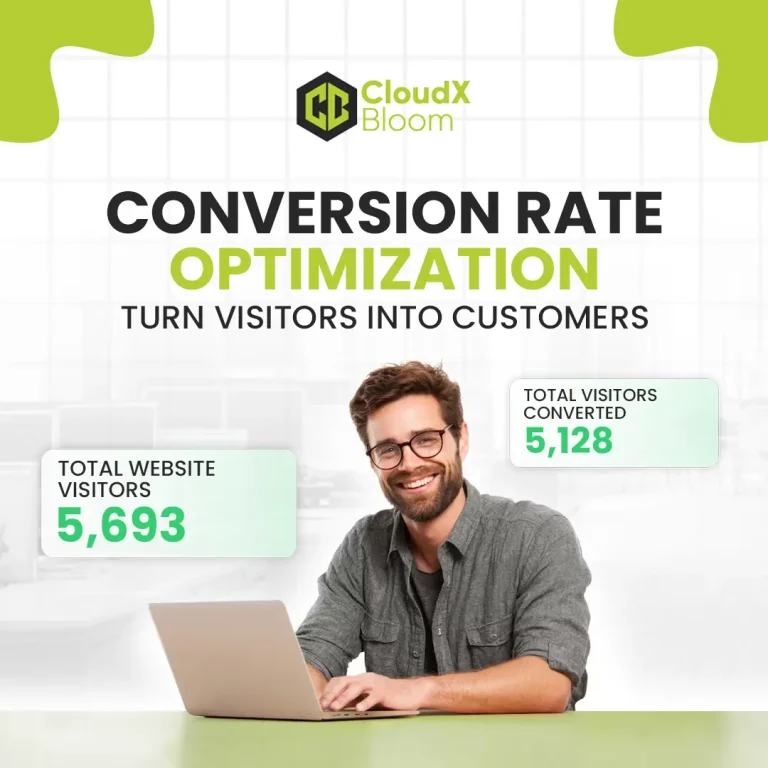
Conversion Rate Optimization (CRO)
What it is: Testing and improving pages so more visitors take action.
Who needs it: Businesses with traffic that isn’t converting well enough.
Expected outcome: More revenue from the same traffic, often the fastest efficiency gain available.
Branding and Creative
What it is: Your identity, positioning, and visual system,m logo, voice, and design.
Who needs it: Businesses launching, repositioning, or struggling to stand out.
Expected outcome: Stronger recognition and trust that lifts every other channel.
Web Design and Development
What it is: Building fast, responsive websites that convert and rank.
Who needs it: Anyone whose site is slow, dated, or hard to convert on.
Expected outcome: Better user experience, higher conversions, and a stronger SEO foundation.
Marketing Analytics and Attribution
What it is: Tracking performance and assigning credit to the channels that drive results.
Who needs it: Every business that wants to know where revenue truly comes from.
Expected outcome: Clear data to cut waste and double down on what works.
Lead Generation
What it is: Coordinated campaigns designed specifically to capture qualified prospects.
Who needs it: B2B and service businesses with defined sales pipelines.
Expected outcome: A steady, measurable flow of qualified leads into your CRM.
Which Service Solves Which Business Problem?
Quick answer: Match the service to the problem. The right starting point depends on whether you lack traffic, conversions, awareness, or measurement.
| Your Problem | Best-Fit Service |
| Not enough traffic | SEO + PPC |
| Traffic, but few sales | CRO + Web Design |
| Nobody knows your brand | Branding + Social Media |
| Leads go cold | Email + Automation |
| Can’t prove what works | Analytics + Attribution |
| Slow, dated website | Web Design & Development |
| Pipeline runs dry | Lead Generation + Content |
Here’s the takeaway: Don’t start with the trendiest service. Start with your biggest bottleneck.
ROI Potential by Service Category
Quick answer: Some services return money fast; others compound over time. A healthy plan blends both.
Fast-Win Services
These show results in weeks:
- PPC: instant traffic and leads
- CRO: quick conversion lifts
- Email Marketing: high return from existing lists
Compounding Services
These build momentum over months but pay off in the long term:
- SEO: traffic that grows and lowers cost over time
- Content Marketing: authority and organic reach
- Branding: trust that improves every channel’s performance
| Service | Time to ROI | ROI Potential | Effort to Maintain |
| PPC | Weeks | Medium–High | High |
| CRO | Weeks | High | Medium |
| Weeks | High | Low–Medium | |
| SEO | 3–6 months | High | Medium |
| Content | 3–6 months | High | Medium–High |
| Branding | 6+ months | Indirect/High | Low |
Here’s the takeaway: Pair a fast-win service with a compounding one. PPC funds growth now while SEO builds your future.
The Service Maturity Model
Not every business needs every service at once. Use this model to gauge where you are.
| Stage | Focus | Core Services |
| 1 Foundation | Be findable and credible | Web Design, Branding, basic SEO |
| 2 Traffic | Drive visitors | SEO, PPC, Content |
| 3 Conversion | Turn traffic into revenue | CRO, Email, Analytics |
| 4 Scale | Expand efficiently | Performance Marketing, Automation, Lead Gen |
| 5 Optimization | Compound and refine | Attribution, AI-driven targeting, Omnichannel |
How to use it: Don’t skip stages. Running advanced performance campaigns without a solid site or tracking just amplifies what isn’t working.
Here’s the takeaway: Invest in order. Foundation first, then traffic, then conversion, then scale.
How to Prioritize Services (Framework)
Quick answer: Prioritize by impact, speed, and fit. Rank each service against your top goal, then start with the highest-scoring one or two.
The Prioritization Checklist
For each service you’re considering, ask:
- Does it directly address my biggest bottleneck?
- How fast can it show results?
- What’s the realistic ROI?
- Do I have the foundation it needs (site, tracking)?
- Can I sustain it long term?
Weighting by Goal
Adjust based on what matters most:
- Need revenue now? Weight PPC, CRO, and Email higher.
- Building for the long term? Weight SEO, Content, and Branding higher.
- Launching something new? Weight, Branding, and Web Design first.
Here’s the takeaway: Score before you buy. Priorities should come from your goals and bottlenecks, not an agency’s upsell.
Once you’ve identified the right mix of services, read our complete guide to hiring a digital marketing agency to compare providers, evaluate proposals, and choose the best partner for your business.
Recommended Service Stacks by Business Type
Quick answer: The right service mix depends on your model. Here are practical starting stacks.
Startups and SMBs
Start with: Web Design, foundational SEO, PPC, and Analytics.
You need a credible site, fast traffic to test demand, and tracking to learn what works before scaling.
E-Commerce Brands
Start with PPC, CRO, Email Automation, and Social Media.
Conversion and retention drive profit. Paid traffic plus strong funnels and email flows do the heavy lifting.
SaaS Companies
Start with: Content, SEO, Lead Generation, and Analytics.
Longer sales cycles reward authority-building content, organic visibility, and tight attribution.
Local Businesses
Start with: Local SEO, Web Design, Reviews, and targeted PPC.
Visibility in local search and maps matters most. A clean site and steady reviews seal the deal.
Here’s the takeaway: Your business model decides your stack. Match services to how you actually make money.
How Services Integrate Into One System
Disconnected services waste budget. Integrated ones multiply each other.
Picture the flow:
- Branding and Web Design: create a credible foundation.
- SEO and Content: pull in organic visitors.
- PPC: adds instant, targeted traffic.
- CRO: turns more of that traffic into leads.
- Email and Automation: nurture leads toward a sale.
- Analytics and Attribution: reveal what’s working, feeding the next round of decisions.
Add Marketing Automation and CRM integration, and the whole engine runs with less manual effort.
Here’s the takeaway: The value isn’t in any single service. It’s in how they hand off to each other across the customer journey.
Industry-Specific Service Considerations
Different industries reward different priorities.
- E-commerce: CRO, paid social, and email flows drive the most profit. Product feed management matters.
- SaaS: Content and SEO build trust over long cycles; attribution proves what converts.
- Professional services: Local SEO, reputation, and lead gen win. Trust signals are everything.
- Healthcare and finance: Compliance shapes content and ads. Accuracy and trust outweigh volume.
- B2B manufacturing: Technical content, SEO, and account-based campaigns fit long, complex sales.
Important note: Ask any agency how they adapt services to your specific industry. Generic plans rarely fit regulated or niche markets.
Common Misconceptions About Agency Services
A few myths lead to bad spending decisions.
- “More services mean better results.” A focused stack beats a bloated one.
- “SEO works instantly.” It compounds over months; patience pays.
- “Branding is just a logo.” It’s positioning and trust that lift every channel.
- “PPC results last after you stop.” Paid traffic stops when spending stops.
- “Analytics is optional.” Without it, every other service runs blind.
Here’s the takeaway: Smart spending comes from realistic expectations. Match service to the bottleneck, give compounding channels time, and never skip measurement.
How AI Is Reshaping Agency Services in 2026
Quick answer: AI is making services faster and sharper, speeding up research, content, targeting, and reporting while human strategy still steers the results.
Across services, AI now shows up in clear ways:
- SEO and Content: AI accelerates research and drafting, plus optimization for AI Overviews and tools like ChatGPT, Gemini, and Perplexity.
- PPC: Predictive models find high-intent audiences and adjust bids in real time.
- CRO: AI spots friction and suggests tests faster.
- Analytics: AI surfaces insights buried in large data sets.
- Automation: Smarter, more personalized journeys at scale.
The balance matters. AI should accelerate human judgment, not replace it. Agencies leaning on AI for everything tend to produce generic work; those ignoring it move too slowly.
Here’s the takeaway: In 2026, AI-readiness is a real differentiator across every service. Ask how an agency uses it and whether strategy still leads.
How Cloud X Bloom Delivers Services as One System
Cloud X Bloom is a full-service digital agency in Austin, TX, built to act as a strategic growth partner rather than a service menu.
The difference is integration. Digital marketing, web design and development, branding and logo design, mobile app development, cloud and DevOps, and software automation and AI work together as one connected system backed by analytics that tie every channel to revenue.
That means fewer handoffs, a clearer plan, and services that reinforce each other instead of competing for budget. With 12+ years of experience, 500+ projects, and a 4.9/5 average client satisfaction rating, the team blends strategy, creative, and engineering under one roof.
Want help choosing the right service mix for your goals? Talk to Cloud X Bloom for a straightforward conversation, no pressure, no jargon.
Key Takeaways
- Digital marketing agency services include SEO, PPC, content, social, email, CRO, branding, web design, analytics, and lead generation strongest when combined.
- Match the service to your biggest bottleneck, not to trends or upsells.
- Blend fast-win services (PPC, CRO, email) with compounding ones (SEO, content, branding).
- Use the Service Maturity Model to invest in the right order: foundation, traffic, conversion, scale.
- Your business type shapes your ideal service stack.
- Services should integrate across the customer journey, handing off from one to the next.
- In 2026, AI accelerates every service, but human strategy still drives results.
Frequently Asked Questions
Most agencies offer SEO, PPC, content marketing, social media marketing, email marketing, branding, conversion rate optimization, web design, analytics, and lead generation, ideally working together as one system.
It depends on your situation. CRO and email often deliver fast, high ROI, while SEO and content compound over time. The best ROI comes from matching the service to your biggest bottleneck.
Start with the service that fixes your biggest problem. If you lack traffic, begin with SEO and PPC. If traffic isn’t converting, start with CRO and web design.
Costs vary by scope and channel, but many agencies charge monthly retainers from a few thousand dollars to $15,000+. Project- and performance-based pricing are also common.
No. A focused stack of three or four well-matched services usually outperforms buying everything at once.
SEO earns organic traffic over time at a lower long-term cost. PPC buys instant, paid traffic that stops when spending stops. Many businesses use both together.
PPC, CRO, and email can show results in weeks. SEO and content typically take three to six months. Branding pays off over the long term.
Conversion rate optimization improves how many visitors take action on your site. It boosts revenue from existing traffic, often making it one of the fastest efficiency gains available.
E-commerce brands usually benefit most from PPC, CRO, email automation, and social media marketing, supported by strong product pages and analytics.
SaaS companies typically prioritize content marketing, SEO, lead generation, and analytics to support longer sales cycles and prove what converts.
A full-service agency reduces handoffs and keeps strategy consistent across services. Specialists can suit a single deep need, but coordination becomes your job.
They use KPIs tied to business goals, leads, sales, cost per acquisition, and return on ad spend rather than vanity metrics like impressions alone.
Yes. Leading agencies use AI to speed up research, content, targeting, and reporting across services, while keeping human strategy in control.
Marketing automation uses tools to deliver personalized, triggered campaigns like email sequences and lead nurturing at scale with less manual work.
A full-service agency like Cloud X Bloom covers web design, branding, marketing, and automation under one roof, so services reinforce each other.